
How to behave when calling the emergency line
When calling the emergency line, it is crucial to keep a cool head. The operator on the other end is a trained professional and will guide you step by step. Your task is not to panic and to answer questions as clearly as possible.
1. Choose the correct number: 155 or 112?
- Call 155 (Emergency Medical Service): If it is exclusively a medical problem (heart attack, unconsciousness, severe injury, choking). You will be connected directly to a medical operator, saving you seconds.
- Call 112 (Integrated Rescue System): If it is a traffic accident, fire, or a situation where, in addition to an ambulance, you also need the police or firefighters.
2. What you must tell the operator
Do not stray from the topic and always answer exactly what is asked:
- WHERE it happened: In the village, state the street and number, in the mountains the path, kilometer marker or landmarks (bridges, gas stations).
- WHAT exactly happened: Briefly describe the situation (e.g., „collision of two cars“, „man collapsed and is not breathing“).
- WHO it happened to: State the number of injured, their condition (consciousness, breathing, bleeding), age, and gender.
- WHO is calling: Your name and phone number for return contact.
3. Communication principles during the call
- Turn on speakerphone: You will have your hands free to provide first aid.
- Listen to the operator's instructions: The operator will instruct you on how to stop bleeding or resuscitate until the ambulance arrives.
- Don't worry about delaying: While the operator is advising you, the ambulance is already on its way. The data is being sent to the crew simultaneously.
- Never hang up first: The operator will end the call only when they have all the necessary information.
4. What to do without a GSM signal?
- Line 112: Try dialing it even without your operator's signal (the phone will use another operator's network). Try restarting your mobile and selecting "Emergency call".
- HZS app: Press the button to call for help. The app will send an emergency SMS with GPS location, which will go through even with minimal signal.
- Movement: If the situation allows, move higher toward the ridge or to an open area.
5. HZS Application
- Application website: https://app.hzs.sk/
-
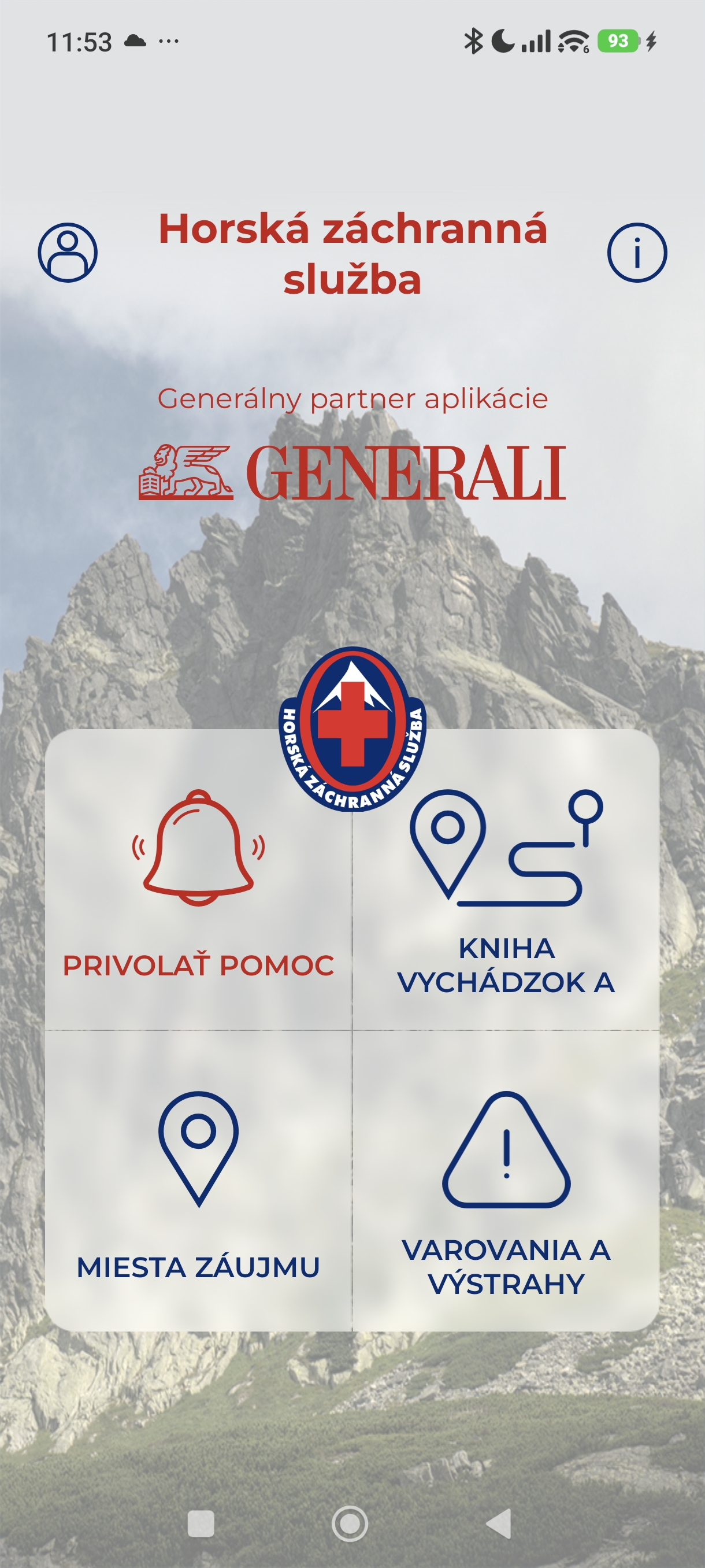
Overview of key features of the HZS App
Overview of key functions for readers:
-
Call for help: Quick connection to the HZS dispatch with automatic transmission of precise coordinates and health status information.
-
Book of departures: A virtual tour in which the hiker enters the planned route and return time. If they do not report back and confirm a safe return within the set time, the system automatically alerts rescuers.
-
Places of interest: A practical map overview of important points such as mountain huts, emergency shelters, HZS stations, or automated external defibrillators (AED).
-
Warnings and alerts: Current information about avalanche danger, trail closures, and adverse weather in individual mountain ranges.
-
-
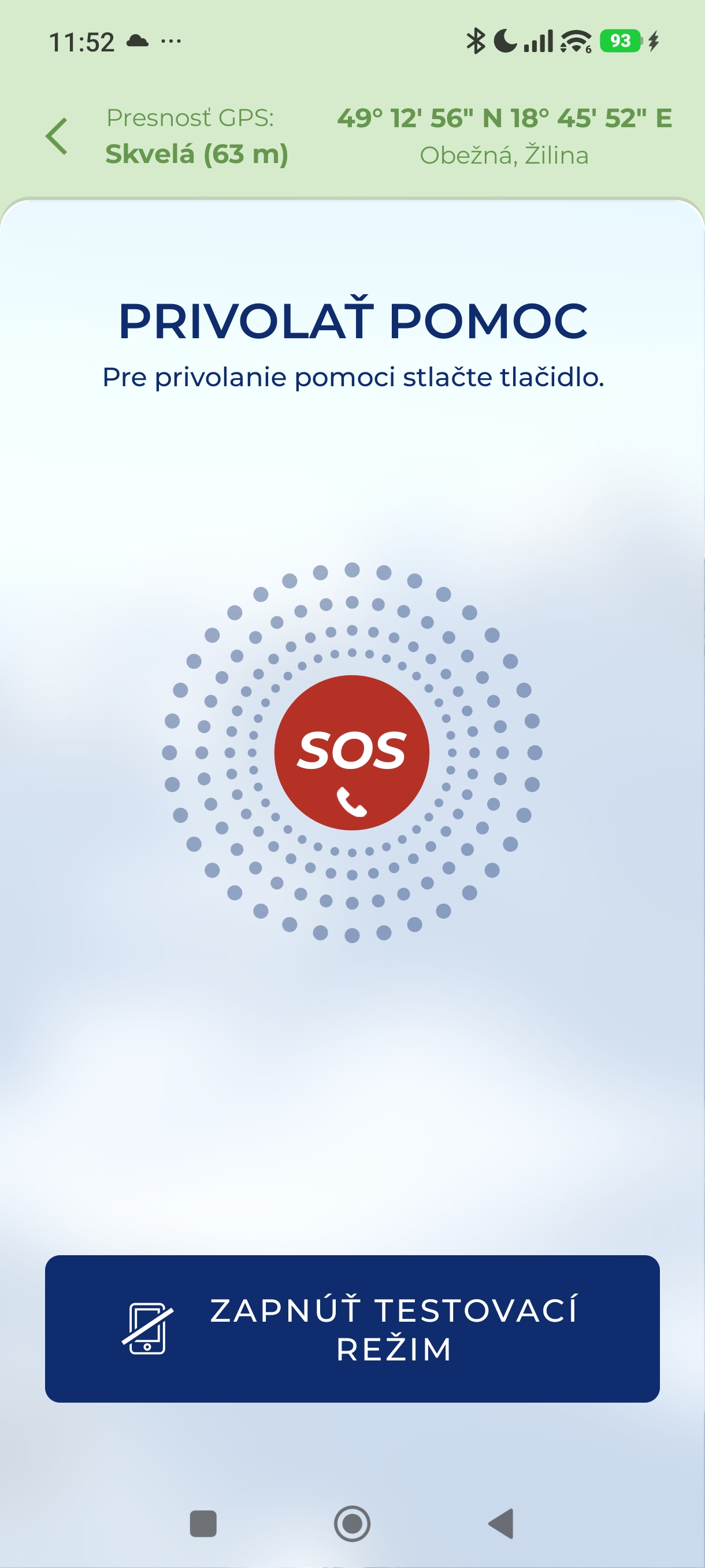
SOS button
Key elements on the screen:
-
Central SOS button: The dominant red button in the center of the screen serves to immediately send an emergency signal and connect with the HZS dispatch with a simple press.
-
Automatic GPS location and accuracy: At the top of the app, it constantly monitors and displays the user's current position, including precise geographic coordinates and deviation in meters (in this case with excellent accuracy of 63 meters). This data is automatically sent to rescuers when the alarm is activated.
-
Test mode: The dark blue button at the bottom „Turn on test mode“ is an extremely practical feature that allows hikers to try out the process of calling for help in a dry run, without the risk of unnecessarily burdening the emergency line.
-
-
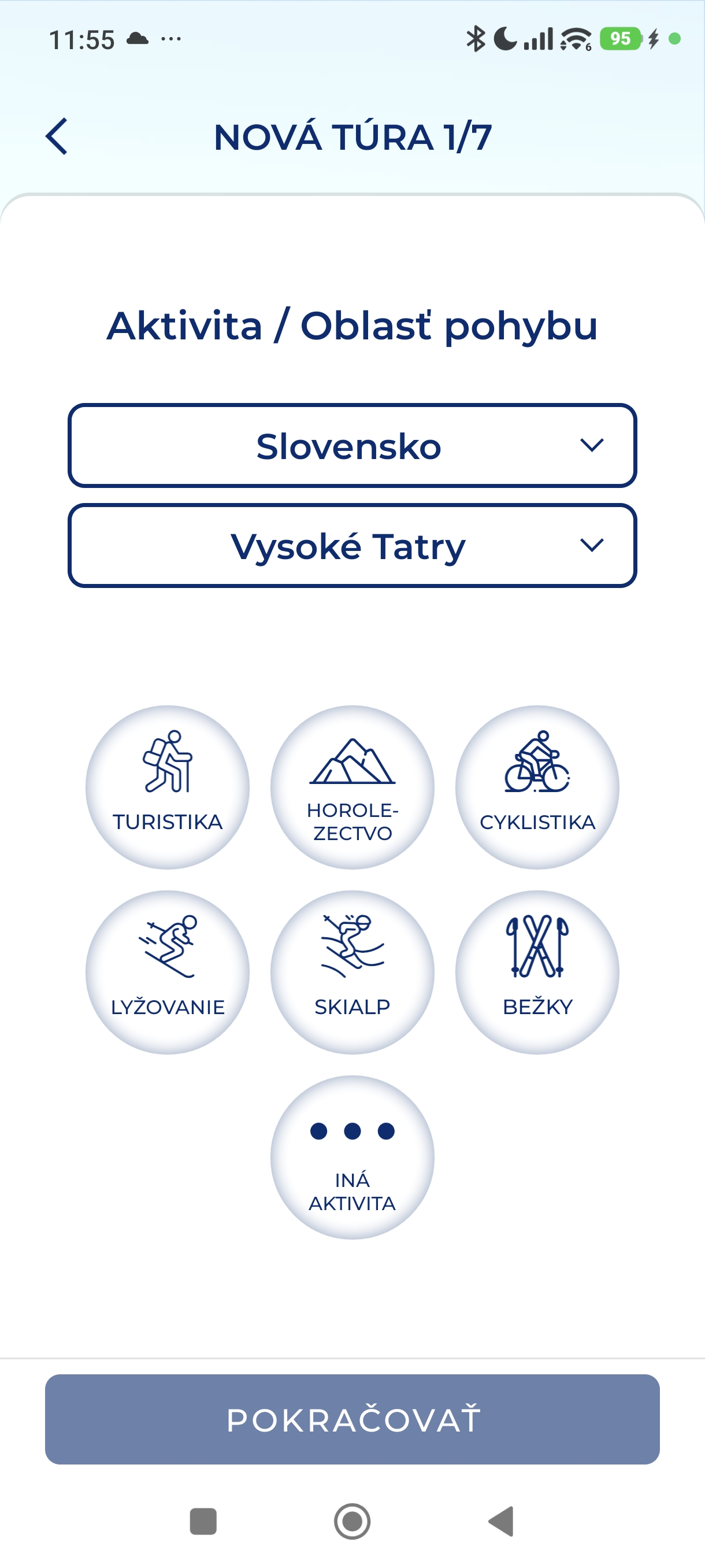
Book of departures
The first step in planning a route in the „Kniha vychádzok“ (New Tour 1/7) function serves to precisely specify the location and type of mountain activity, which in the event of a missing person will provide rescuers with key information for deploying the right technique and tracker.
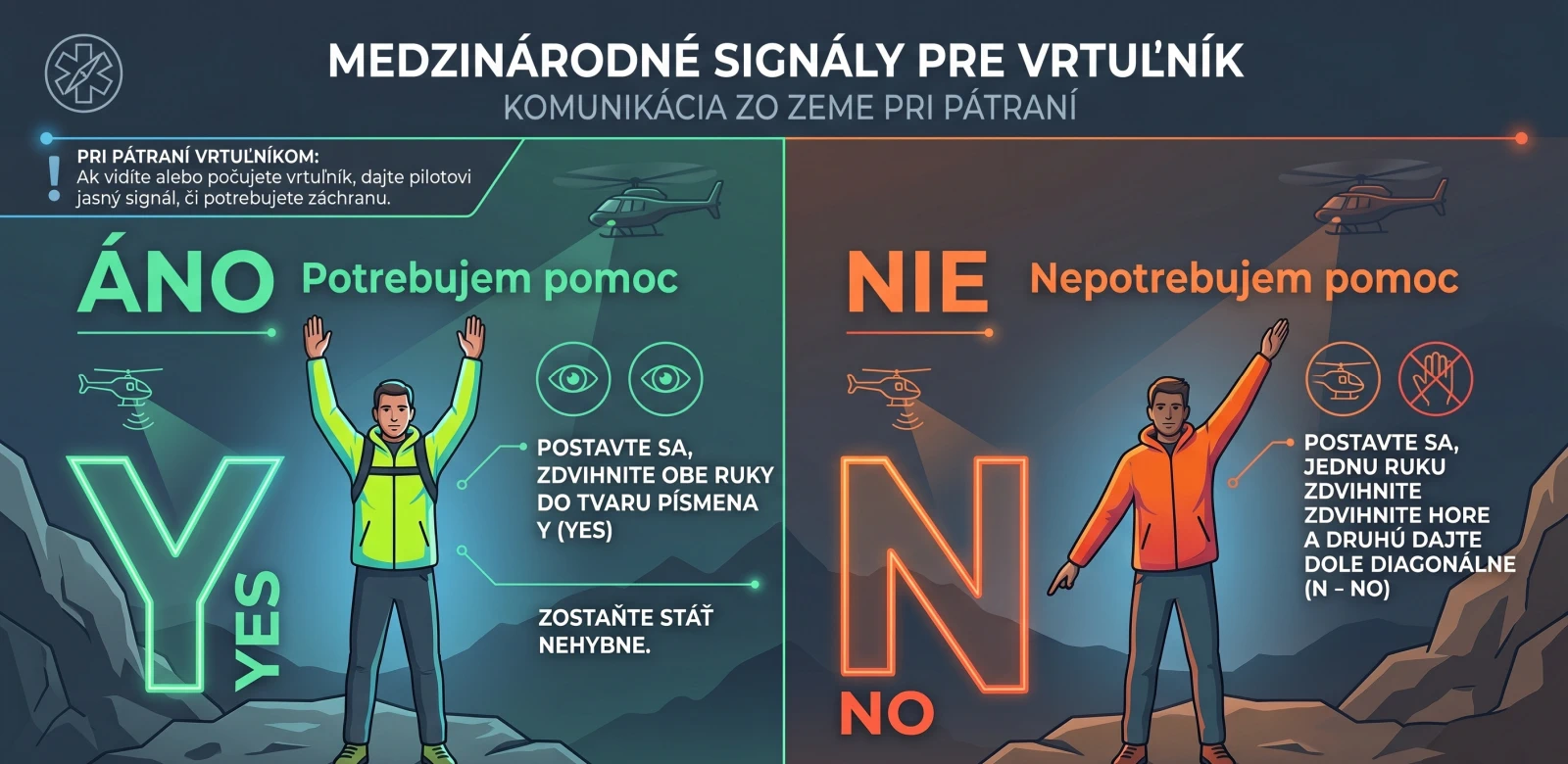
Alpine emergency signal
If technology fails, use an audible (whistle, shout) or light signal: 6 times per minute (every 10 seconds), then a 1-minute pause. The rescuers' response is 3 times per minute.
Key principle to conclude
The best rescue without a signal starts even before the hike. Always inform someone of your route and expected return time. If you don't check in, your loved ones will alert the Mountain Rescue Service (HZS), which will know exactly where to look for you.
There are no comments yet. Be the first!