

Photo:Northern viper | Author:BennyTrapp | License: CC BY-SA 3.0
A bite from a common European viper (the only venomous snake in Slovakia) requires immediate medical attention, but first and foremost, it is important not to panic. For a healthy adult, a bite is rarely fatal, but for children, the elderly, people with weaker hearts, or allergy sufferers, it poses a serious risk.
Here are the exact steps to follow, and what to avoid instead.
Part of reducing the risk of encountering an adder is also limiting your movement to marked hiking trails only. Adders like to bask in the sun during the day. If an adder has bitten us, it does not mean that it has necessarily released its venom. If that did actually happen, we would recognize it by symptoms such as swelling and pain at the site of the bite.
What to do immediately after a bite
-
Stay calm and limit movement: Panic, running, or fast walking accelerates the heart rate, causing the venom to spread much faster through the bloodstream. The affected person should sit or lie down immediately.
-
Call for help: Immediately call the medical emergency service at number 155 or the universal emergency line 112.
-
Immobilize the limb: Keep the affected arm or leg completely at rest. It is best to immobilize it with an improvised splint (as for a fracture) and leave it hanging loosely. Do not raise it above heart level.
-
Remove tight items: Immediately take off rings, watches, bracelets, and tight clothing from the injured limb. The area around the wound will soon swell significantly, and these items could act as a tourniquet.
-
Cover the wound lightly: If you have a first aid kit, you can gently cover the wound with a sterile gauze square to keep dirt out. Do not bandage it tightly under any circumstances.
What you should NEVER do (dangerous myths)
When providing first aid after a snake bite, mistakes are often made that significantly worsen the patient's condition.
-
Do not use a tourniquet: Never constrict the limb above the wound. Closing off the blood circulation causes the venom to concentrate in one place, which can lead to extensive tissue death (necrosis) and, in extreme cases, even amputation.
-
Do not suck out the venom with your mouth: It is ineffective and extremely dangerous. The rescuer risks transferring the venom into their own bloodstream through small wounds in the oral cavity, and may also introduce dangerous bacteria into the wound.
-
Do not cut, burn, or otherwise treat the wound: This way you will not get the venom out, you will only worsen tissue damage.
-
Do not apply ice: Cooling the wound is not recommended, as it can cause further damage to an already sensitive area.
-
Do not give alcohol or caffeine: Coffee, energy drinks, or alcohol speed up the pulse or dilate blood vessels, helping the venom spread faster through the body. Give only clean water.
Important note on moving: If you are in difficult-to-reach terrain where the ambulance
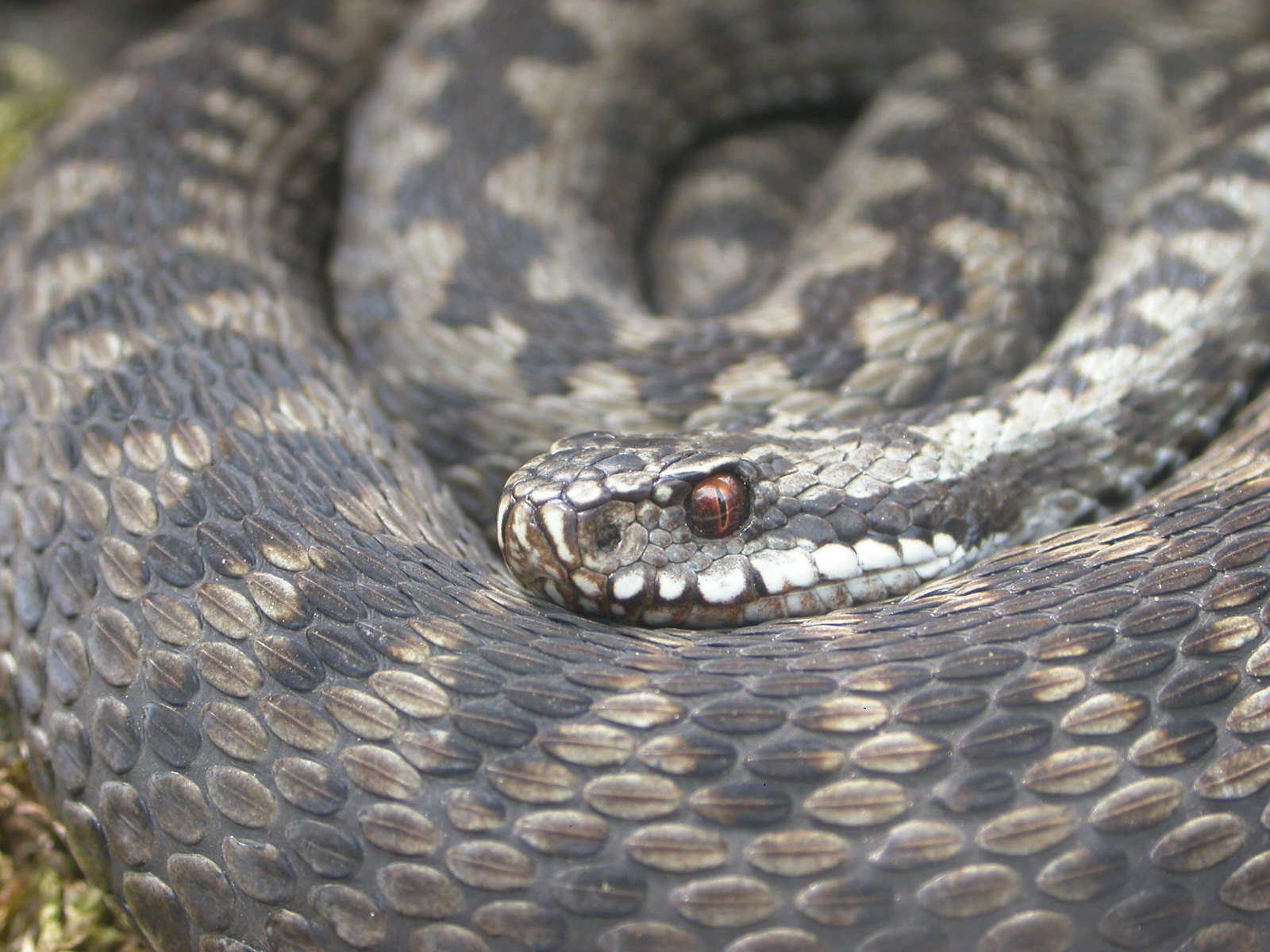
Photo:Common European adder | Author: Zdeněk Fric | License: CC BY-SA 3.0
There are no comments yet. Be the first!